

Our Thoughts LSKJ OPC PVT LTD
AI powered Journey in IT sectors for all domains and claim to be world's first Org to focus on employee growth to fullest

Hospital
Management
Healthcare – Symbols of Care and Innovation

This visually communicates the essence of healthcare with clarity and purpose. It’s not just icons it’s a universal language of trust, science, and compassion. Crafted to inspire confidence, the design reflects a commitment to well-being at every level.
-
Hospital Dashboards & Apps → Icons like the syringe, DNA, or heart represent modules (e.g., vaccinations, genetics, or cardiology).
-
Patient Portals → Simplify navigation for users by associating icons with records, appointments, or test results.
-
Healthcare Presentations & Reports → Enhance storytelling and data visualization in research or administrative meetings.
-
Signage & Accessibility → Wheelchair and hospital icons are used in facilities to guide patients effectively.
-
Educational Material → DNA helix, gender, and test tubes help students and professionals grasp topics quickly.
This refers to the administrative and logistical processes for overseeing doctors and their activities within hospitals and clinics.
-
Appointment Scheduling: Managing doctor availability, consultation hours, and patient bookings.
-
Patient Record Management: Storing and accessing electronic medical records, prescriptions, and patient histories.
-
Workflow Automation: Automating tasks like patient reminders, billing, and payment processing.
-
Resource Optimization: Tracking workload, optimizing scheduling, and ensuring the right doctor is available for patients.
-
Communication: Facilitating communication between doctors, administrative staff, and patients.
-
Reporting: Generating reports on practice growth, financial performance, and other key metrics. .

%20(1).png)
A health record management system (HRMS) is a digital system for storing, organizing, and retrieving patient information, including medical history, treatments, allergies, and lab results
-
Data Management: The system helps to manage and update patient data, including appointments, treatments, and billing information.
-
Access and Sharing: Authorized healthcare providers, such as doctors, nurses, and specialists, can access patient records in real-time, facilitating coordinated care across different healthcare settings.
-
Patient Portals: Many systems include patient portals that allow patients to view their health records, book appointments, and communicate directly with their providers.
-
Security and Compliance: HRMS incorporates advanced security features to protect patient privacy and ensure compliance with regulations like HIPAA, preventing unauthorized access to sensitive information.
-
Electronic Health Records (EHRs): These are the core digital databases within an HRMS that store patient information, such as demographics, medical history, medications, immunizations, and lab results.
Staff and student ward management involves overseeing a hospital or educational ward's personnel, patient care, environment, and resources to ensure quality care, efficient operations, and a safe learning and treatment space.
-
Patient Care Management: Admission, assessment, care planning, and delivery of care based on patient needs.
-
Personnel Management: Supervision, orientation, training, and evaluation of staff, as well as assigning duties based on skill and experience.
-
Supply and Equipment Management: Ensuring equipment is functional, supplies are adequate, and inventory levels are maintained.
-
Environmental Management: Maintaining cleanliness, a safe temperature, good lighting, and proper waste disposal to create a therapeutic environment for patients and staff.


Laboratory management is the process of organizing, supervising, and coordinating a scientific laboratory's personnel, resources, equipment, and processes to ensure its efficient and reliable operation.
-
Personnel Management: Recruiting, training, motivating, and supervising a team of scientists, technicians, and other staff is crucial for a well-functioning lab.
-
Workflow and Process Optimization: Implementing and refining procedures to improve efficiency, track experiments, and ensure that all protocols are followed consistently.
-
Safety and Compliance: Adhering to safety standards, handling hazardous materials properly, and meeting regulatory requirements are paramount to a safe lab environment.
-
Quality Control: Ensuring the reliability and accuracy of lab results by performing quality checks on equipment and maintaining data integrity.
-
Documentation and Reporting: Handling all necessary documentation and processing reports, including data collection and review, is a core responsibility.
-
Strategic Planning: Setting scientific and technical objectives that align with the organization's overall mission and implementing plans to achieve them.
-
Resource Management: This includes managing consumables, reagents, and high-value equipment, ensuring a sufficient and properly functioning inventory.
Smarter Stock Control. Seamless Pharmacy Operations.
Our Pharmacy Inventory Management System is designed to help you maintain optimal stock levels, reduce waste, and streamline every aspect of your inventory process, from procurement to point-of-sale.
-
Real-Time Stock Tracking
Get complete visibility into your inventory at all times. Track every unit of medicine—from arrival at the pharmacy to the moment it's sold or dispensed. Monitor expiration dates, batch numbers, and stock quantities in real-time.
-
Automated Reordering
Set custom reorder points and let the system automatically generate purchase orders when stock runs low. Maintain ideal inventory levels and avoid overstocking or understocking.
-
Expiry Management & Batch Tracking
Our system automatically flags items nearing expiry and allows batch-wise tracking, ensuring safe and compliant dispensing while reducing wastage.
-
Comprehensive Reports & Analytics
Make data-driven decisions with detailed inventory reports. Analyze stock movement, sales trends, and supplier performance to optimize purchasing and reduce costs.
-
Supplier & Purchase Order Management
Easily manage suppliers, create and track purchase orders, and record goods received. Maintain a clear audit trail of all inventory transactions for regulatory compliance.
-
Integrated with POS & Sales
Seamlessly connect inventory with sales operations. Every sale instantly updates inventory levels, helping you maintain accurate stock counts without manual adjustments.
-
Secure & Role-Based Access
Ensure that only authorized staff can view or modify inventory data. Our system offers role-based access control for maximum security and accountability.


Sales and Billing is the heart of every pharmacy.
It manages financial transactions, ensures accuracy in billing, and provides real-time insights into your pharmacy’s performance. Our system integrates seamlessly with inventory and prescription management to give you a complete 360° solution..
Effortless, Transparent & Accurate
The Billing process involves every step from creating an invoice to recording payments. We designed it to save time, reduce errors, and improve customer trust.
Process We Use:
-
Gather Information: Auto-fetch product, prescription, and pricing details.
-
Create Invoice: Generate detailed invoices with taxes, discounts, and promotions.
-
Deliver Invoice: Print or share digitally via email/SMS.
-
Collect Payment: Support for cash, card, UPI, and wallets.
-
Mark Invoice as Paid: Update records in real-time to maintain financial accuracy.
-
Track History: Maintain logs of all invoices for auditing and compliance.
Sales Tracking & Reports
Turn Data Into Insights
-
Pharmacies thrive when they can see trends. Our Sales module offers:
-
Daily, weekly, and monthly sales summaries.
-
High-demand medicine analysis.
-
Tax/GST-compliant statements.
-
Exportable reports (Excel/PDF).
-
Visual dashboards for at-a-glance performance.
SERVICES:
1.Hospital Feasibility Study

What is A Hospital Feasibility Study?
A Hospital Feasibility Study is the best way to find out the sources of patient flow to the Hospital. The Feasibility Study comprises both a Market and Financial Analysis of the Project and is an essential aspect to be considered either while establishing a new hospital or a new facility in an existing hospital or expanding the existing hospital.
Objective of carrying out a Market Feasibility Study for a Healthcare Facility by Our Thoughts LSKJ
-
Format suitability, whether if Tertiary - Single, Multispecialty or Multi-super Specialty
-
Evaluating the suitability of the proposed facility location
-
Identifying the right Specialties to be provided by the Healthcare Facility for the location
-
Understanding the Critical Gaps in the Private Healthcare provided in the planned catchment by the key factors that Doctors in the area look for from such Facility
Our Thoughts LSKJ uses these 5 phases
-
The first phase starts with planning for the project by doing a market study and financial feasibility study. Afterward, you should have the data you need to decide whether you want to move forward with the project.
-
The second phase is the pre-planning stage. This is when you conduct on-site visits, meet with the bankers and find the answers to questions that may come up about your project.
-
The third phase is when financing is settled, the building is designed, and construction begins.
-
At the fourth phase, it’s time to begin operations planning. This includes starting recruitment, defining policies, and obtaining licenses and accreditation.
-
Finally, your implementation of a hospital project is complete, but work still needs to be done. The fifth phase involves the ongoing evaluation of hospital operations.
2.Quality and Accreditation

What is Quality and Accreditation?
Consistent delivery of a product or service according to expected standards. Quality of care is the level of attainment of health systems‟ intrinsic goals for health improvement and responsiveness to legitimate expectations of the population.
"The Hospital Accreditation" approach is a concept and practice that yields beneficial results to patients, customers, hospital personnel, the hospital, the Faculty of Medicine, the society and the country as a whole.
Our Thoughts LSKJ can provide assistance in
-
Assistance in developing and reviewing the hospital plan for Accreditation at various stages of the project Orientation, training and assistance towards developing an organizational quality structure and culture that would set the pace for involving and integrating the hospital staff in the accreditation process.
-
Assisting the organization and formulation of committees and teams guiding on the development of Quality Assurance Programme.
-
Assisting in the development of Documents (SOPs, Manuals, Policies, instructions for the hospital, departments and infection control), modulating the existing system and suggesting changes to support accreditation norms. The required documents will be developed in collaboration with the hospital staff.
-
Assistance in the development of Record Keeping Programme of the healthcare facility through guidance on the organizing of records, development of formats wherever required and operationalization of Monitoring system
-
Organization of Training programmes throughout the accreditation preparation process. These training programmes would be generated through, consultant trainers and resources, external trainers and resources, in house facility trainers and resources.
3. Billing and Invoice Manage
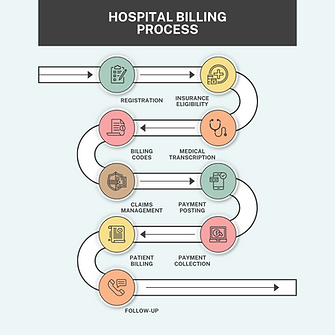
The Billing and Invoicing process is a vital part of a business's finance, helping to track revenue, manage cash flow, and maintain accurate records.
We at Our Thoughts LSKJ use these process which involves the following steps:
-
Deliver invoice: Deliver the invoice to the customer via mail, email, or through an online payment system.
-
Collect payment: Collect payment from the customer.
-
Mark invoice as paid: Once the payment is received, mark invoice as paid in the business's accounting system
-
Gather information: Collect all the necessary details about the products or services provided, pricing, and other billing-related information.
-
Create an invoice: Create an invoice that lists the products or services, price, payment terms, and contact information for both the provider and the customer.
-
Review and approve: Review and approve the invoice to ensure accuracy.
4. Health Record Management
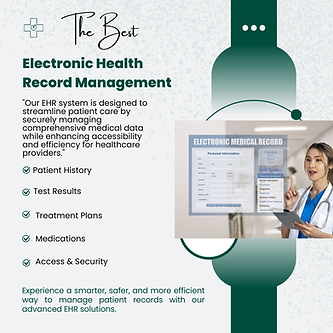
The Health Record Management process involves collecting, organizing, storing, and retrieving patient information. The goal is to ensure the accuracy, confidentiality, and security of patient records.
We use these steps to process and help the hospitals with our system:
-
Collect information: Gather patient information, such as their medical history and treatment plans
-
Digitize: Convert paper records into digital format to make them easier to access
-
Store securely: Use a secure system to protect patient records from theft, tampering, and unauthorized access
-
Retrieve quickly: Make sure records are easily accessible for timely retrieval
-
Label and organize: Use an indexing system to ensure records are accurately labeled and organized
-
Audit regularly: Conduct regular audits to ensure the accuracy and validity of records, and to check compliance with privacy regulations
-
Update promptly: Update records as soon as there are changes to a patient's condition or treatment plan
-
Dispose of securely: Follow HIPAA protocols for destroying patient data, such as shredding paper records and wiping clean electronic records
5. Reception Management
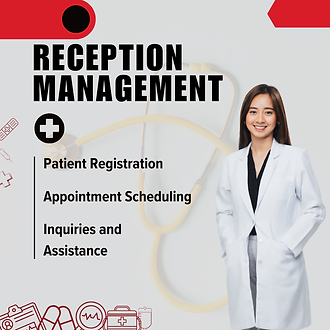
Reception management involves ensuring that visitors are welcomed and their needs are met. The process can include creating guest experiences, managing emergencies, and establishing policies.
Reception management tasks
-
Guest experiences :Create a personalized experience for guests, such as welcoming repeat guests by name
-
Emergency management :Use emergency management software to track visitors and respond to incidents
-
Visitor policies :Establish clear policies for visitors and ensure they are easy to communicate
-
Virtual receptionists:Use an electronic reception system to allow visitors to check in themselves
-
Compliance: Ensure that the reception process complies with legal and regulatory requirements
-
Workflows: Customize workflows for different types of visitors
-
Guest registration: Create a registration record for each guest, including room and room rate assignments
6. Analytics & Reporting

The Analytics and Reporting management process involves collecting, analyzing, and reporting data to gain insights and make decisions.
Steps we consider:
-
Collect data: Choose data sources and collect data to feed into your analytics solution.
-
Analyze data: Organize and analyze the data to identify trends, compare performance, and find opportunities for improvement.
-
Create reports: Determine the goals of the report and create it to communicate the insights.
-
Use reports: Use the reports to make data-driven decisions about strategy.
We consider
-
Data quality: Accurate, complete, and timely data is essential for reliable and meaningful reports.
-
Scalability: As data volumes grow, reporting and analytics systems need to scale accordingly.
-
User training: Users need to understand and use the tools and insights provided.
-
Report goals: Determine the goals of the report so you know what sections to include.
Tools we use
-
Dashboards :Interactive data visualization tools that display key performance indicators (KPIs), metrics, and project data.
-
Analytical reports :Quantitative and qualitative analysis of data to evaluate a company's performance.
7. Ward Management
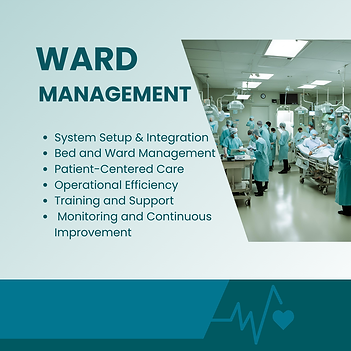
Ward management is the process of organizing and coordinating resources, personnel, and processes in a hospital ward. The goal of ward management is to provide high-quality patient care in a safe and clean environment.
Components of ward management
-
Patient care: Preplan nursing care activities, assign tasks to nurses, and delegate responsibility for patient care
-
Personnel management :Evaluate employee performance, develop good human relations, and provide guidance to juniors.
-
Environmental cleanliness: Maintain a clean and safe environment by adhering to policies and procedures
-
Supply and equipment maintenance: Maintain inventories, request supplies and services, and ensure equipment is in good condition
-
Quality improvement: Monitor and evaluate the quality of care, identify areas for improvement, and implement changes
-
Communication: Coordinate with other departments, communicate effectively with medical staff, and establish a communication system.